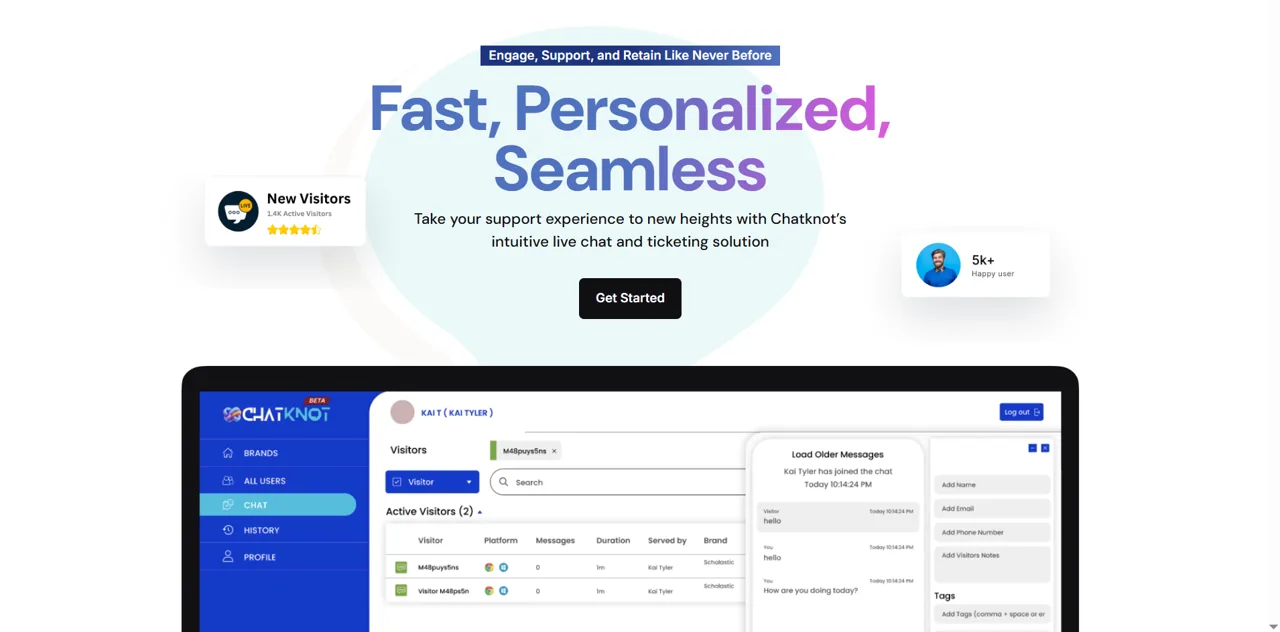
How the pieces connect
My contribution spans the React dashboard, Node.js and Express APIs, authentication, real-time events and application data. The engineering challenge is connecting a live conversation to the history, visitor context and permissions that make it useful to a support team.
- React dashboard: conversations, visitors and administration
- Node.js and Express: authenticated application APIs
- SQL: conversation history and operational data
- Socket.io and Redis Pub/Sub: live communication
Persistent data and live events serve different needs: SQL retains the conversation beyond the current connection, while Socket.io and Redis support updates as activity happens. Authentication and permissions belong in the API layer as well as the interface.
Explore ChatKnot for the product experience, or contact me about the implementation.
The product
ChatKnot helps teams see website visitors, manage conversations, retain conversation history, and turn engagement into organised leads. The product also supports multiple brands, user authentication and role-based administration.
Engineering coverage
My work crossed the product boundary rather than stopping at a single screen. The interface, API behaviour, authentication, real-time events and operational data needed to function as one coherent system.
- React dashboard and reusable interface flows
- Node.js and Express APIs with authentication and permissions
- SQL-backed application data and conversation history
- Socket.io events with Redis Pub/Sub for live communication
- Visitor, lead and brand-management workflows
Product outcome
The result is a connected SaaS surface where live conversations and the data around them remain useful after the message is sent. Teams can move from visitor activity to conversation context, lead information and administration without disconnected tools.