Implementation scope
My frontend work connects a Next.js website to editor-managed WordPress content through GraphQL and ACF components. The challenge is maintaining a consistent campus experience while allowing the content team to update individual sections.
- Editors manage content and ACF components in WordPress
- GraphQL provides structured content to the frontend
- Next.js renders reusable, responsive page sections
- Visitors explore the campus, community and availability
The headless approach separates publishing from presentation. It gives the frontend control over layout, while requiring content fields and page components to stay aligned as the site evolves.
The brief
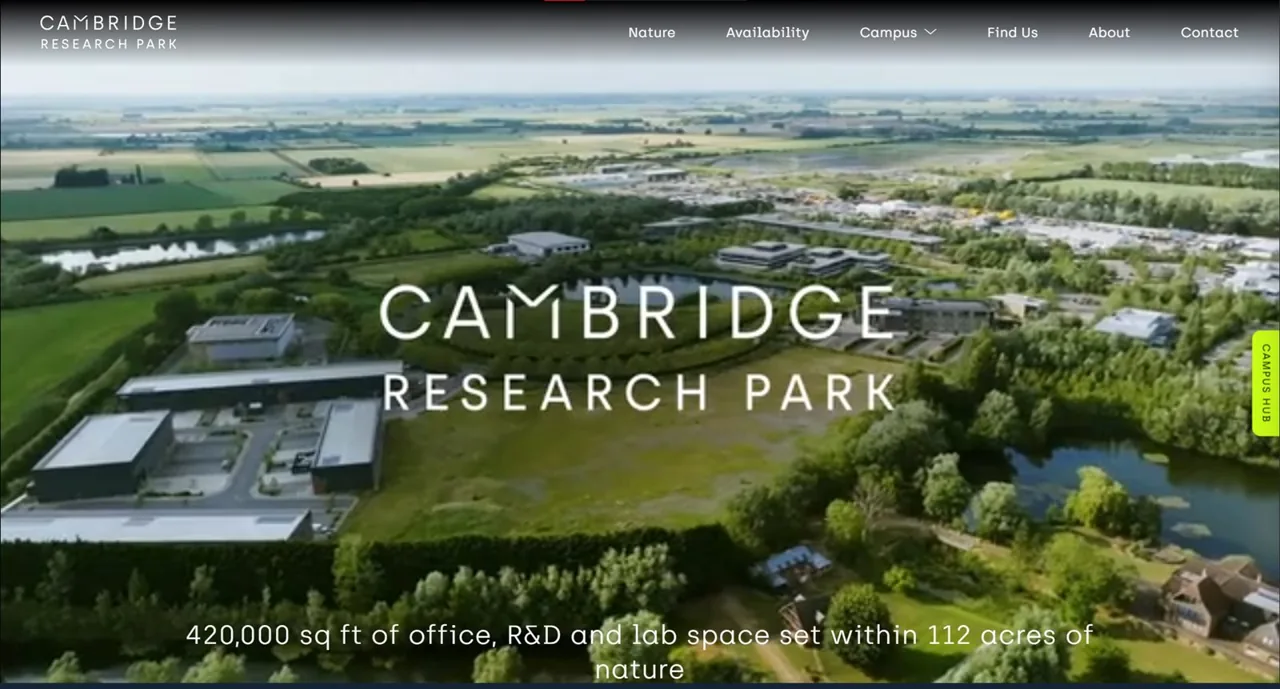
The site needed to represent more than property availability. It had to show the research park as a connected place to work: buildings and laboratories alongside landscape, tenant community, wellbeing, events and campus services.
Implementation
The frontend combines responsive editorial layouts with content delivered from WordPress through GraphQL. This gives non-technical editors control of the story while the Next.js experience keeps page structure and navigation consistent across devices.
- Responsive Next.js interface development
- GraphQL content integration
- Headless WordPress and editor-managed page content
- Image-led campus and availability journeys
- Mobile layouts for long-form property content
Experience outcome
Commercial information and campus storytelling sit inside one discovery journey. Prospective tenants can understand available space while also seeing the environment, community and amenities that define the wider location.