The review bottleneck
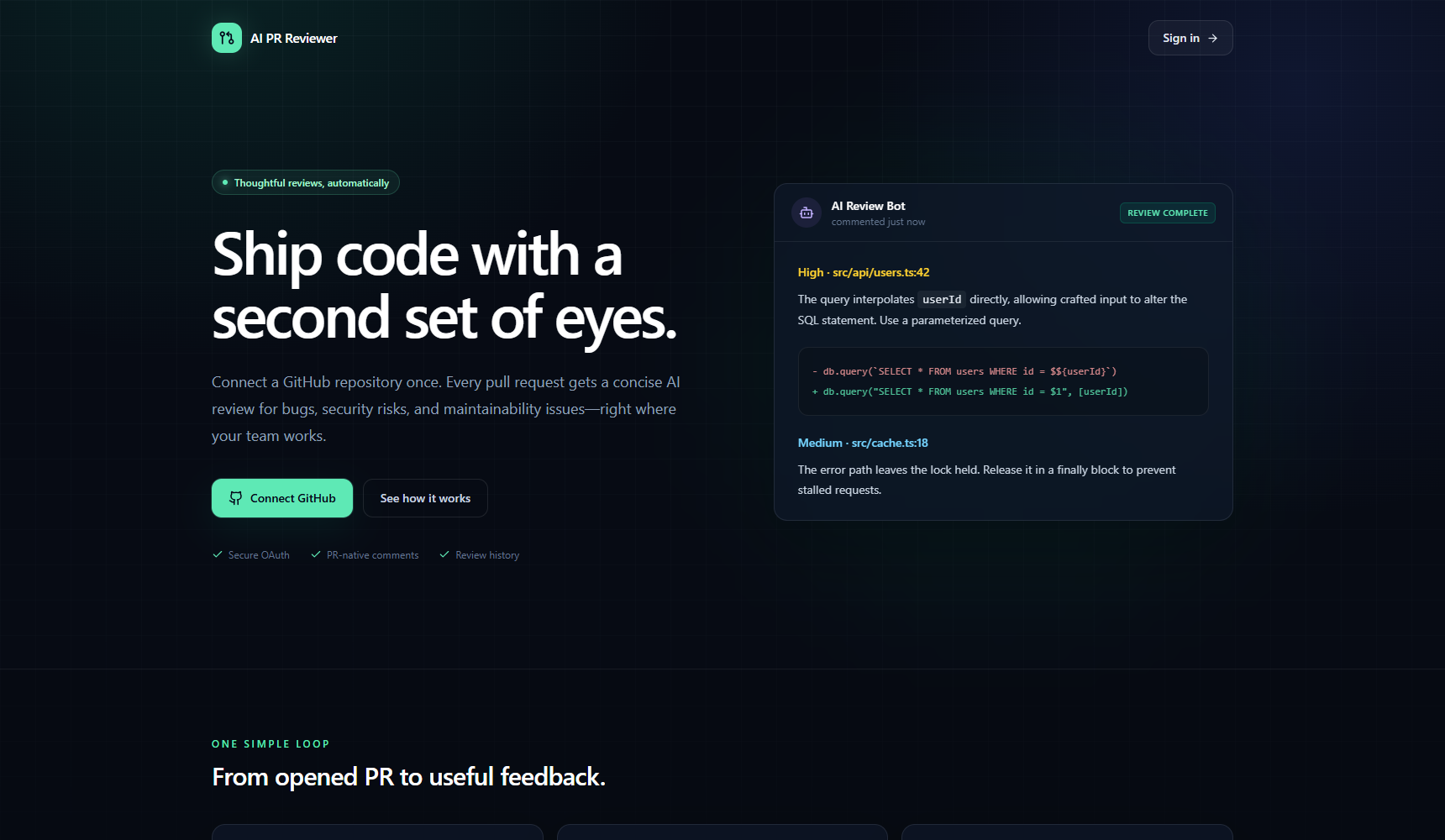
When developers open a pull request for a new feature, senior developers need to inspect the changes before approving a merge. Checking for bugs, security issues and code quality concerns takes time and can slow the team's delivery.
I built AI PR Reviewer to handle an initial analysis and bring actionable findings into the team's existing GitHub workflow, giving reviewers more time for architecture, business logic and final approval.
From PR to feedback
- Connect once. Link a GitHub repository through OAuth.
- Trigger a review. A signed webhook signals when a pull request is opened or updated.
- Analyze the changes. Changed code is fetched, chunked and reviewed with Gemini for bugs, security risks and maintainability concerns.
- Act on findings. Severity flags, file references and suggested fixes help developers understand what needs attention. Markdown feedback can be posted directly to the pull request.
Keep reviewers in control
The dashboard brings connected repositories, review history and findings into one place. Reviewers can filter by status, inspect severity levels, and choose, edit or dismiss findings before posting. They can also run another review as the code changes.
- Security findings with concrete remediation suggestions
- Bug detection and code quality analysis
- PR-native comments where developers already work
- Review history and publication status tracking
Designed for safer delivery
The tool helps teams catch potential issues earlier and reduces repetitive review work for senior developers and managers. Developers receive focused feedback before merging, while the team retains responsibility for validating changes and approving production releases.