My contribution
I implemented the responsive frontend using Next.js with WordPress-managed content. My scope is the website experience: presenting the property, its amenities, location and availability across screen sizes.
- WordPress-managed property content
- Responsive Next.js pages and image layouts
- Motion and visual transitions
- Clear routes to location and available space
The implementation challenge is balancing large photography and motion with readable content and clear navigation. The property's floor count and area describe the building; the work demonstrated here is the frontend implementation.
The property story
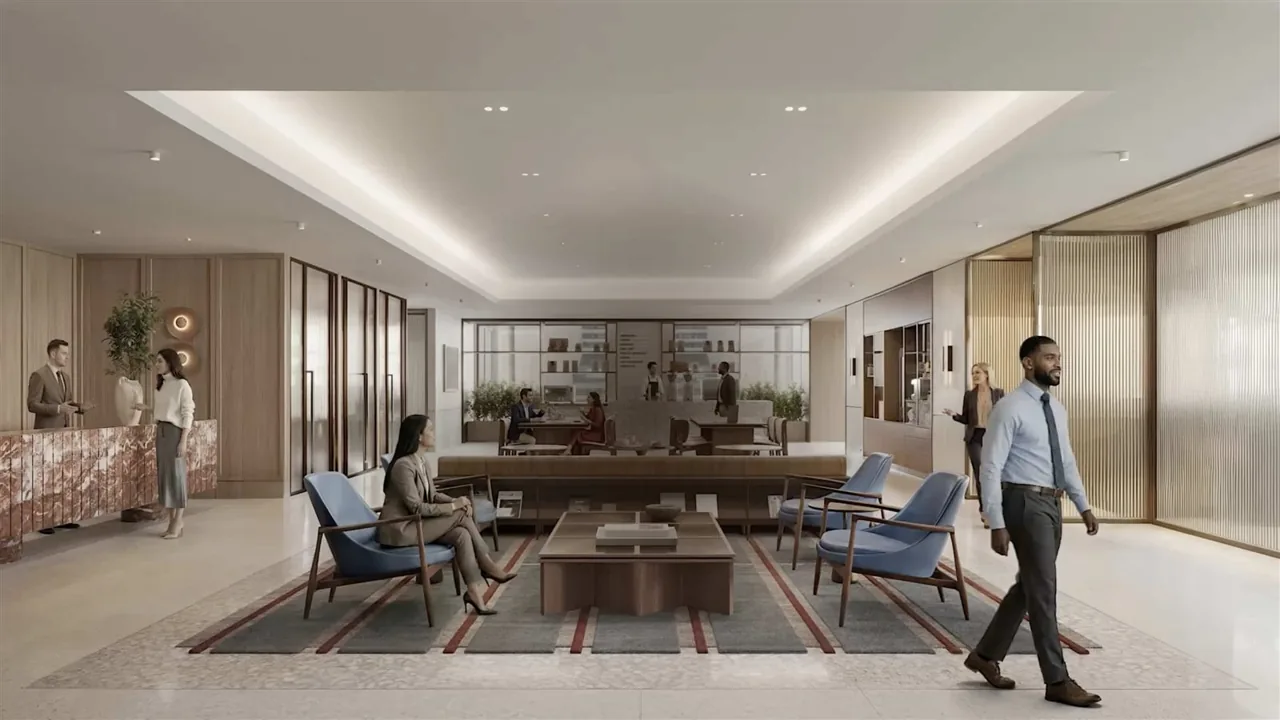
The website presents the building as a complete workplace experience rather than a list of specifications. Large-format imagery, restrained typography and deliberate motion connect its renovated spaces, amenities, Times Square location and availability.
Frontend focus
The implementation balances visual scale with usable navigation and responsive behaviour. The WordPress-backed content structure allows the building team to maintain key information while the frontend preserves a consistent premium presentation.
- Responsive Next.js page implementation
- WordPress-managed content
- Motion-led transitions and image storytelling
- Building, amenities, location and gallery journeys
- Availability paths that remain clear across devices
Experience outcome
Prospective occupiers get one coherent route through the property: first understanding its character, then its workplace offering, location and available space. The design supports exploration without losing the commercial purpose of the site.